District of Lübeck · Baltic resort · mouth of the Trave
Travemünde – key facts and figures
Travemünde is a Baltic seaside resort and, since 1913, the north-easternmost district of the Hanseatic city of Lübeck, where the Trave meets the Bay of Lübeck – about 15 kilometres from central Lübeck. Around 13,900 people live across 41.31 km². This page gathers the key figures, landmarks and facts – each with a source and verification date.
- 1187 year founded
- 13,903 inhabitants (2024)
- 41.31 square kilometres
- 1539 Germany’s oldest lighthouse
- ≈ 4 km of Baltic bathing shore
- 1 M+ visitors per year
Travemünde at a glance: the key pages
From the figures to the day itself – ways into beach, dates, getting here and practical matters.
- Beach and water Beach sections, water quality and today’s water temperature.
- Events What is on today and in the coming weeks.
- Getting here Train, bus, car and ferry – with live departures.
- Parking Car parks, prices and where it is free.
- Priwall ferry Fares, times and who travels free.
- Food and fish rolls Fish, cutters and the addresses at the harbour.
- Accommodation The four locations and the official host directory.
- With children Playgrounds, climbing forest and rainy-day ideas.
Travemünde at a glance
| Status | District of Lübeck (since 1913), formerly an independent town |
|---|---|
| Population* | about 13,903 (as of 31 Dec 2024) |
| Area | 41.31 km² |
| Population density | about 337 inhabitants/km² |
| Localities | Alt-Travemünde, Priwall, Brodten, Teutendorf, Ivendorf |
| Elevation | 3 m above sea level |
| Postcode | 23570 |
| Coordinates | 53° 57′ N, 10° 52′ E |
| State | Schleswig-Holstein |
Location, districts and coast
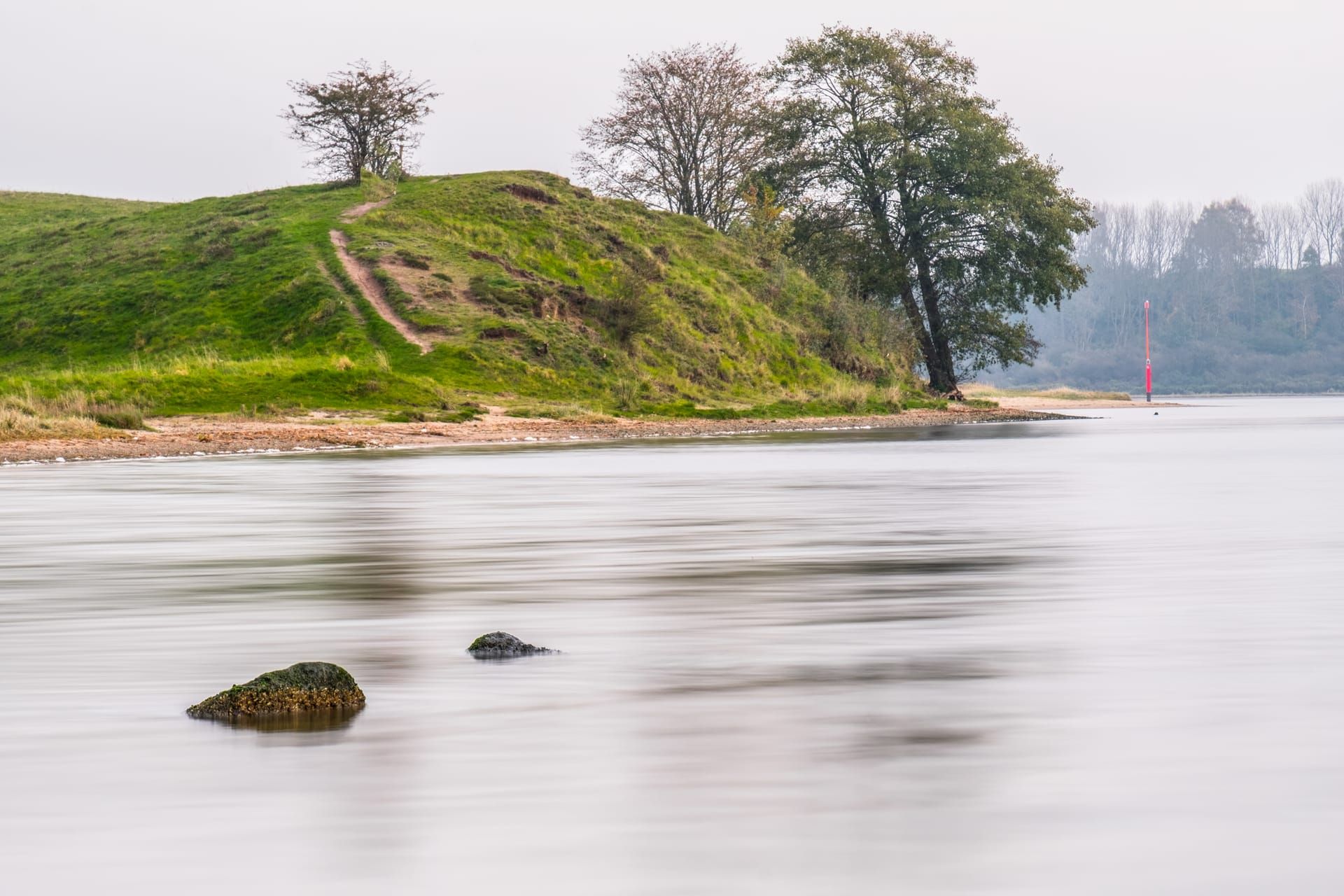
- Travemünde lies where the Trave meets the Bay of Lübeck: the town centre with the Vorderreihe on the west bank, the roughly three-kilometre Priwall peninsula on the east bank, linked by the Priwall ferry.
- Besides Alt-Travemünde and the Priwall, the district includes the three villages of Brodten, Teutendorf and Ivendorf, incorporated in 1935.
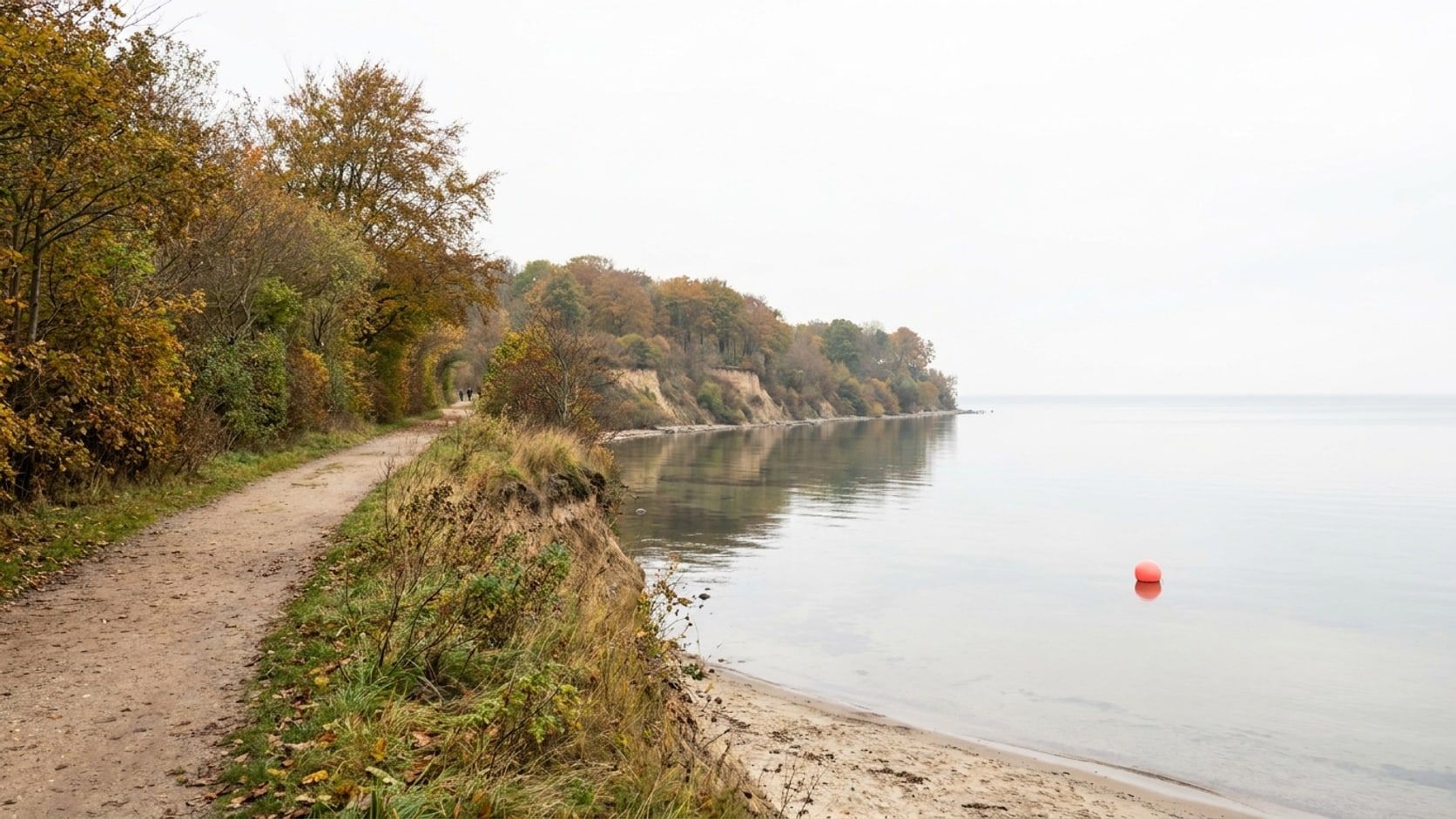
- North of the Kurstrand runs the Brodten cliff coast – an active cliff up to 20 metres high over about four kilometres towards Niendorf, popular for walks.
- Two official bathing waters are classified “excellent” under the EU directive; the bathing shore totals about four kilometres (promenade beach approx. 1 km, Priwall approx. 1.2 km).
The Bay of Lübeck is part of the Baltic Sea – how the Baltic and the North Sea differ has its own page.
The landmarks in figures
- 1539
Old Lighthouse
built by Dutch masons, 31 m tall, eight storeys – Germany’s oldest surviving lighthouse, a monument since 1922, a museum since 2004.
- 114.7 m
Maritim beacon
focal height on the 119 m Maritim high-rise, the tallest building in Schleswig-Holstein; in service since 30 April 1974 – it replaced the Old Lighthouse.
- 1911
Barque Passat
built by Blohm + Voss, masts about 56 m. As a cargo sailer she rounded Cape Horn 39 times; today a museum ship on the Priwall.
- since 1962
Skandinavienkai
Germany’s most important Baltic ferry port – ferries to Sweden, Finland and the Baltics; the first line (TT-Line to Trelleborg) started in 1962.
- 16th c.
St Lawrence church
the Protestant parish church in the old town, built in the second half of the 16th century – next to the Lübsche Vogtei of 1551.
- 1.7 km
Beach promenade
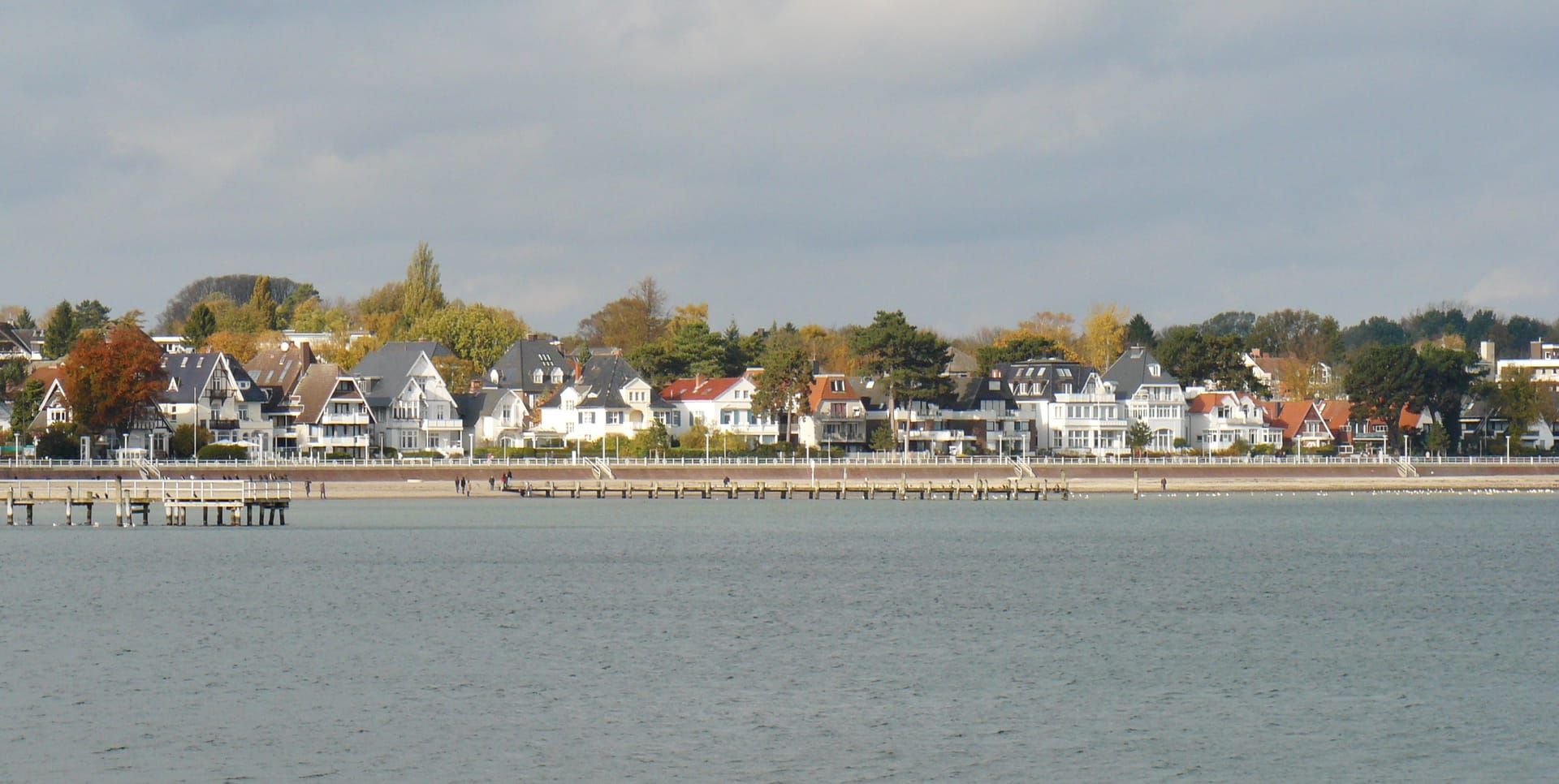
laid out 1898–1904 and 20 m wide, refurbished 2010–2012 – the fashionable promenade that still defines the imperial-era resort.
Port, tourism and transport
- Skandinavienkai is Germany’s most important Baltic ferry port. Ferries run from here to Sweden (Trelleborg, Malmö, Karlshamn), Finland and the Baltics; through traffic bypasses the town via a dedicated junction to the B75.
- Tourism counts over a million overnight and day visitors a year; around 20 cruise ships dock annually at the Ostpreußenkai on the Vorderreihe.
- Trains stop at three stations (Skandinavienkai, Hafen, Strand); the line from Lübeck has been electrified since 2008 and runs hourly.
- By car the A1 and the B75 (the “Bäderstraße”) lead here; the Priwall ferry links the town centre with the Priwall peninsula year-round.
Resort, beach and events
Travemünde was recognised as a seaside resort in 1802 – the second on the German Baltic coast. In season the beaches hold up to 1,500 beach chairs. Its best-known event is Travemünde Week, held since 1889, which with around 2,500 competitors and over 1,000 boats ranks among the largest sailing events in the world. Add the sand sculpture exhibition at the fishing harbour and a Christmas market at the cruise terminal. From 1949 to 2012 the town also had a casino.
Literature, an emperor and an escape: famous names in Travemünde
Travemünde has seen literary and contemporary history: Thomas Mann immortalised the resort in “Buddenbrooks” and “Tonio Kröger”, Kaiser Wilhelm II visited in 1894, and in 1933 the future chancellor Willy Brandt fled via Travemünde to Denmark – a plaque in Jahrmarktstraße recalls it.
Frequently asked questions about Travemünde
Is Travemünde its own town?
No. Travemünde was an independent town until 1913 and has since been a district of the Hanseatic city of Lübeck in Schleswig-Holstein. It lies at the mouth of the Trave on the Bay of Lübeck.
How many inhabitants does Travemünde have?
Around 13,903 (as of 31 December 2024). The City of Lübeck’s official statistics earlier recorded 13,456 for the “Sozialbezirk 31-35 Travemünde” (as of 31 Dec 2017); figures can differ slightly depending on the reference area.
Where is Travemünde?
Travemünde is in Schleswig-Holstein at the mouth of the Trave on the Bay of Lübeck (Baltic Sea), Lübeck’s north-easternmost district, about 15 kilometres from the city centre. Coordinates: 53° 57′ N, 10° 52′ E.
How large is Travemünde?
The district covers 41.31 km² with about 337 inhabitants per km² and lies at about 3 metres above sea level. The postcode is 23570.
Which localities belong to Travemünde?
The district comprises Alt-Travemünde, the Priwall peninsula and the three villages of Brodten, Teutendorf and Ivendorf, incorporated in 1935.
What is Travemünde known for?
For its beach and seaside resort, the Old Lighthouse of 1539 (Germany’s oldest surviving lighthouse), the barque Passat, the Skandinavienkai ferry port and Travemünde Week (since 1889).
Since when has Travemünde belonged to Lübeck?
Travemünde was finally bought by Lübeck in 1329 and was incorporated as a district in 1913.