Baltic gold · wrack line · October–March
Finding amber on the Baltic coast
Amber is fossilised tree resin – the “gold of the Baltic”. Along the Bay of Lübeck around Travemünde and at the Brodten cliff it can be found with a little knowledge: at the right time, in the right place and with an eye for the right material. What amber is, when and where the chances are best, how to tell real amber – and why, in case of doubt, a find does not belong in a pocket.
Right now
- How long will it stay light? until 18:26, golden hour from 17:38calculated for Travemünde (SunCalc)
- Where can I see the sunset today? 18:26 in the west – Priwall · Trave shore, Priwall promenade by the Pötenitz lagoon; back on the passenger ferry until 22:20, then on the car ferrycalculated for Travemünde (SunCalc); SWHL timetable, as of 18 Jul 2026
When can you find amber?
The high season for amber runs from October to March. The best chances come after autumn and winter storms with onshore winds, when the sea washes plenty of material onto the beach. Early risers who reach the beach before the other collectors get the fresh strandings to themselves.
Where to look?
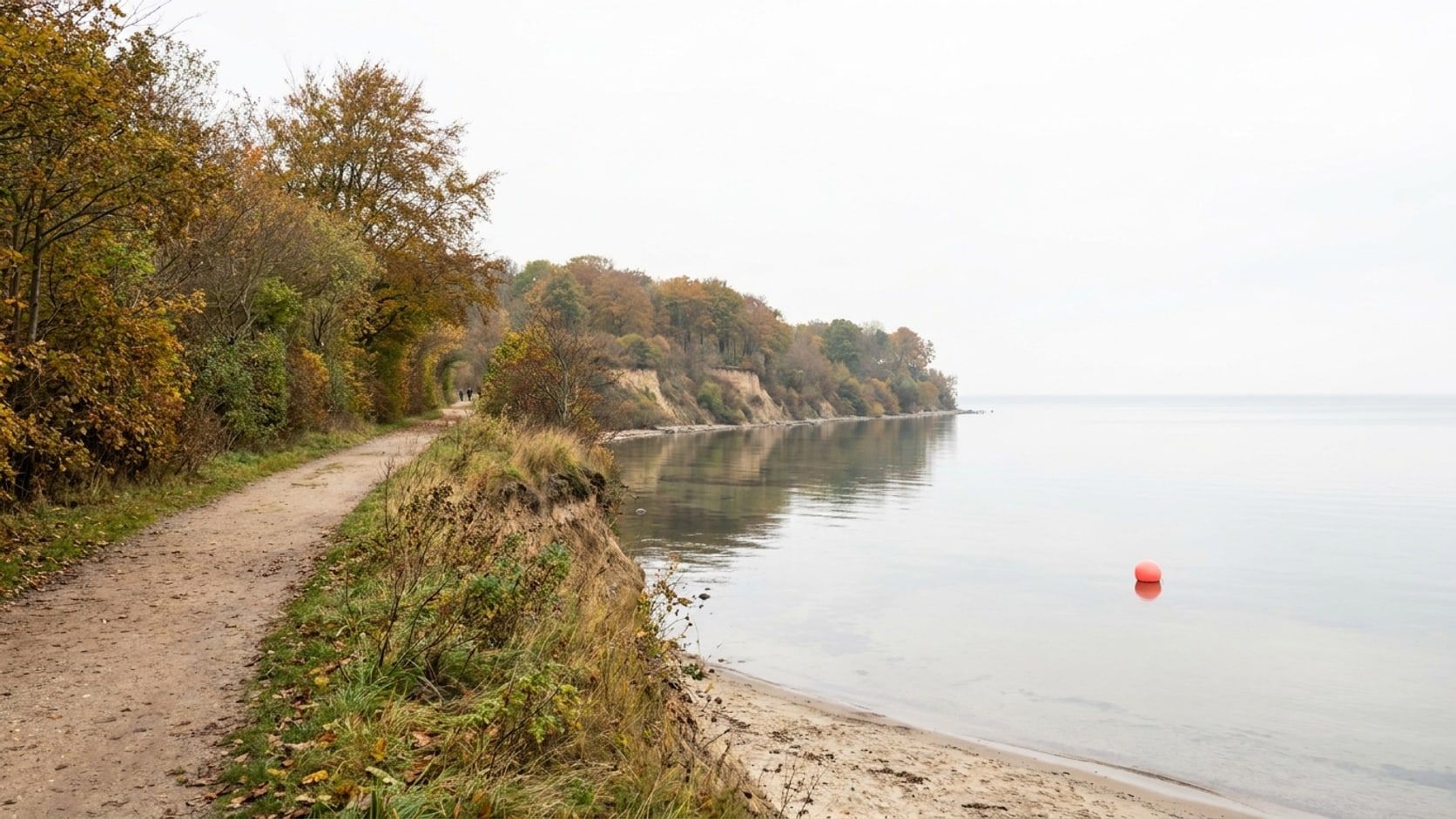
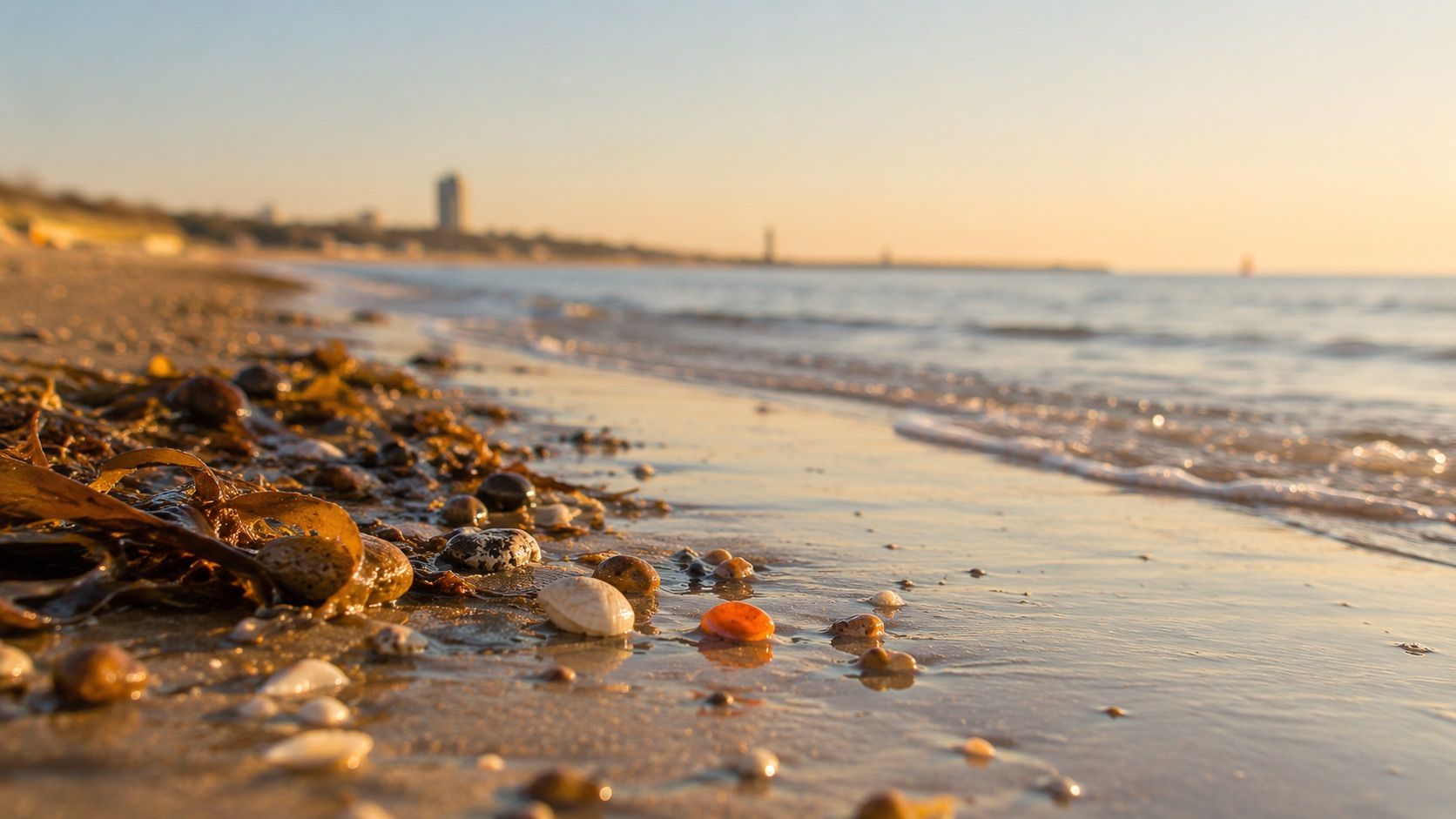
Look where seaweed, bladderwrack, algae and driftwood have washed ashore. Among shells and flotsam, in the so-called wrack line, lies the golden-yellow stone. The Bay of Lübeck – like the Hohwacht Bay – and the cliffs supply the material: at the Brodten cliff the coast erodes and keeps releasing finds.
How do I recognise real amber?
Real amber is strikingly light and feels warm, not cool like stone. It floats in strongly salted water (the salt-water test) and sinks in fresh water. Rubbed, it builds an electrostatic charge and attracts small scraps of paper. Under UV light real amber fluoresces – another reliable sign.
CAUTION: confusion with phosphorus
Caution is essential: white phosphorus from old wartime munitions can look confusingly similar to amber. Once dry it ignites in the air by itself and burns with great heat. Such a find must never go into a pocket or into clothing. In case of doubt, place the piece in a fireproof metal tin with damp sand, kept away from clothing – and in an emergency call the rescue services.
Amber around Travemünde
Around Travemünde the beach sections below the cliffs are worth searching after a storm. Anyone wanting to combine the search with a walk will find at the Brodten cliff the eroding edge with the most material; current wind and water data are shown under Beach and water. Amber is never a guaranteed find – but with patience, timing and the right stretch of beach the chances rise noticeably.
Frequently asked questions about finding amber
When is the best time for amber?
The high season runs from October to March. Chances are best after autumn and winter storms with onshore winds, early in the morning before the other collectors, once the sea has washed fresh material ashore.
How do I recognise real amber?
Real amber is very light, feels warm, floats in strongly salted water and sinks in fresh water. Rubbed it builds an electrostatic charge, and under UV light it fluoresces.
Can amber be confused with phosphorus?
Yes. White phosphorus from old wartime munitions resembles amber, can ignite in the air by itself and cause severe burns. A suspicious find does not belong in clothing but in a fireproof metal tin with damp sand.
Where along the Bay of Lübeck do you find amber?
Wherever seaweed, algae and driftwood lie in the wrack line. The Bay of Lübeck and the Hohwacht Bay, as well as cliffs like the Brodten cliff, supply the material the sea releases.
Does amber float?
In strongly salted water amber floats or hovers just below the surface, while in fresh water it sinks. This salt-water test is a simple way to tell real amber from heavier stone.