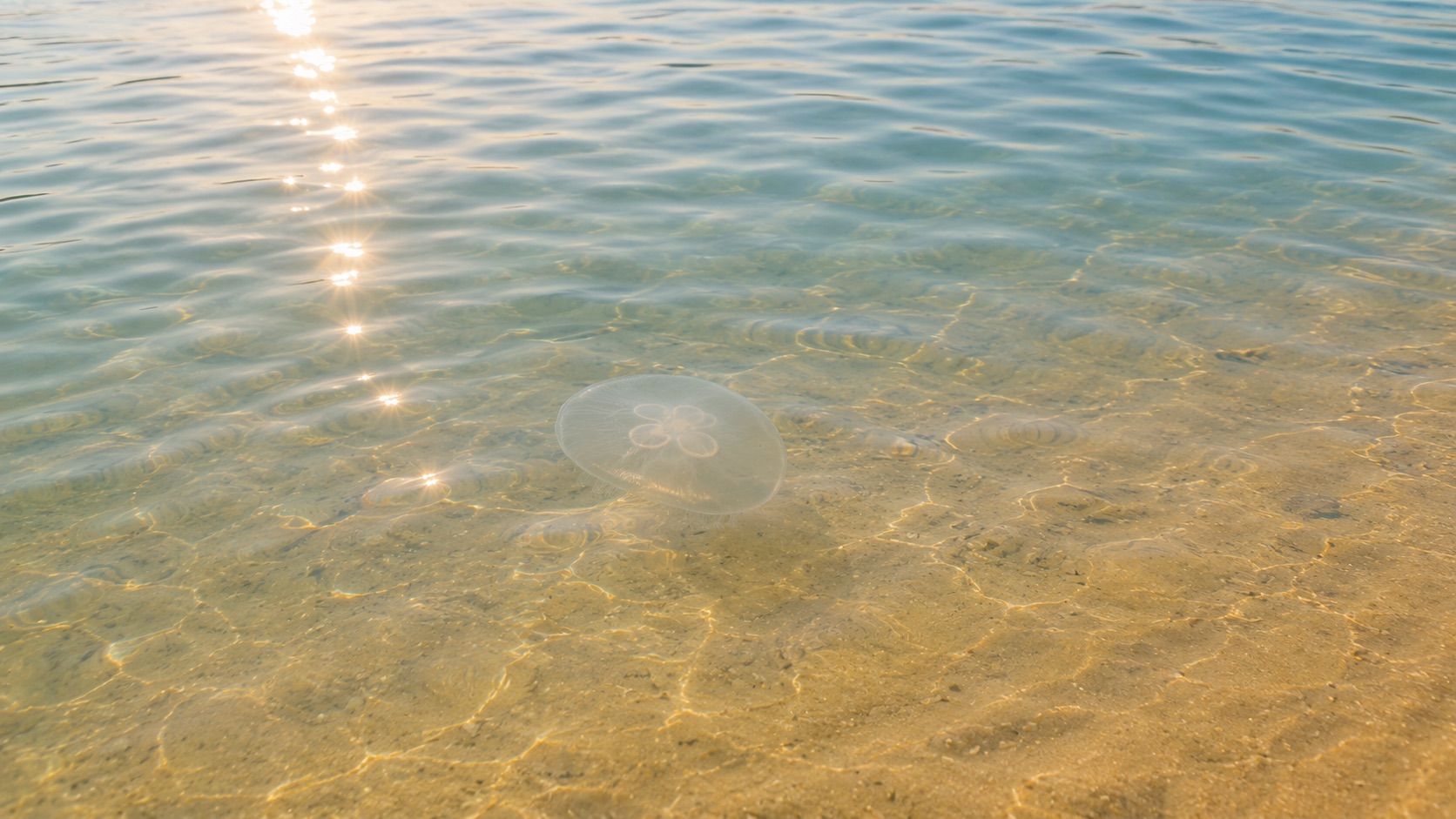
Baltic Sea · fire · moon jellyfish
Jellyfish in the Baltic Sea
Anyone swimming in the Baltic Sea sometimes meets jellyfish in summer. Most are harmless – only one stings. Which one that is, how to identify all species, and what helps if it happens.
What are jellyfish conditions like today?
rather low
Outside the warm months, or with cool water, jellyfish rarely drift close to shore.
Water temperature: 14,4 °C Wind direction: 140°
This is an estimate from water temperature, wind direction and season – not a measurement and not a sighting report; there is no official jellyfish count. What counts is a look into the water or the DLRG station on the beach.
What they look like
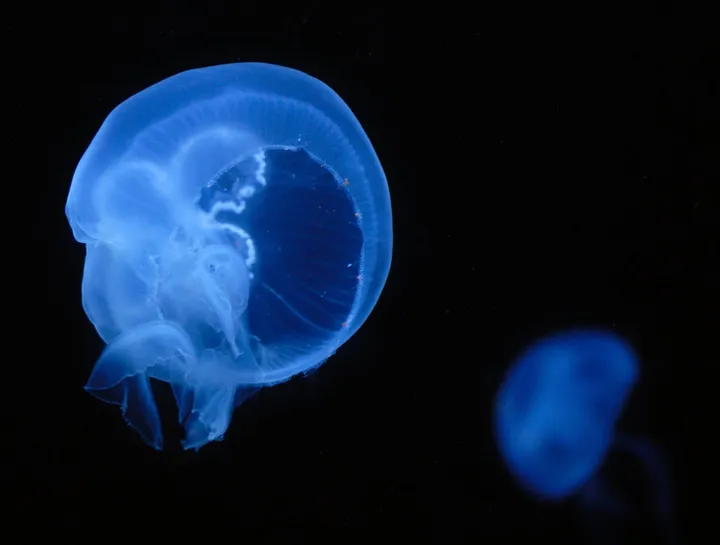 harmless
 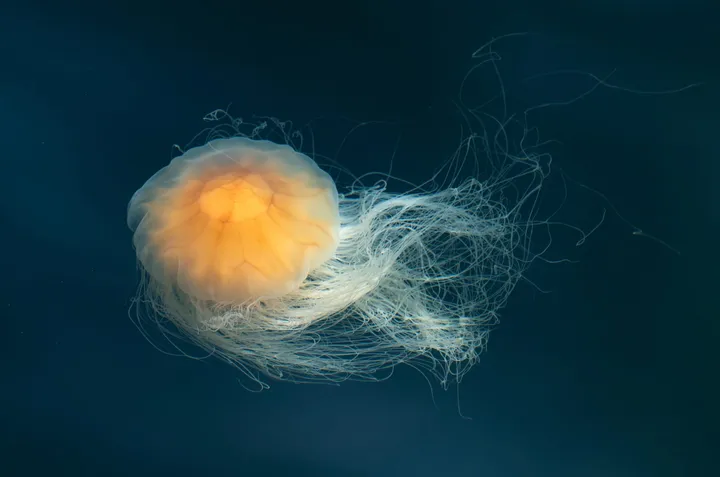 stings!
 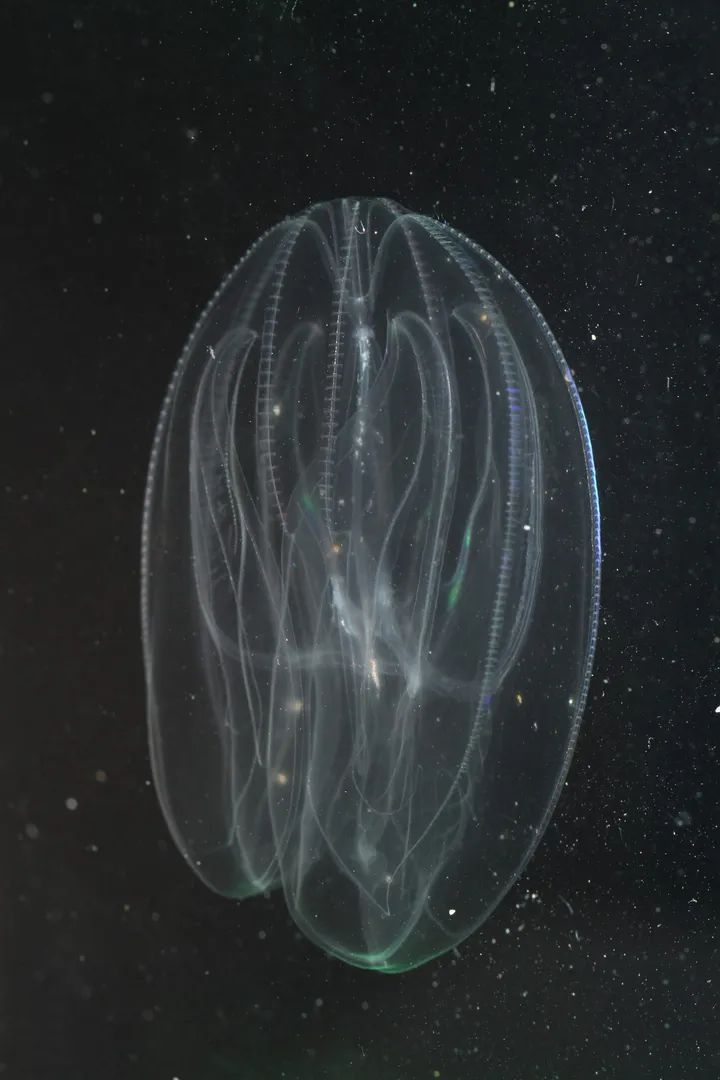 harmless
 Which jellyfish live in the Baltic Sea? Species ID
These are the species bathers meet most often on the German Baltic coast – the same from Travemünde via Fehmarn to Rügen:
| Species | How to identify | Noticeable sting? |
|---|---|---|
| Moon jellyfish (Aurelia aurita) | transparent, 20–30 cm, four ring-shaped markings in the centre – pink to violet in females | no – its stinging cells cannot penetrate human skin |
| Lion’s mane jellyfish (Cyanea capillata) | bell dark red to yellow, up to 1 m, long fine tentacles | yes – burns like stinging nettles, avoid the tentacles |
| Stalked jellyfish (Becherqualle) | small (approx. 3 cm wide, 5 cm tall), bell grey, yellow or brown | has stinging capsules; hardly relevant for bathers given its size |
| Sea walnut (comb jelly) | only approx. 1 cm, transparent to milky, glows in the dark | no – comb jellies have no stinging cells |
The most common: moon jellyfish
The moon jellyfish (Aurelia aurita) is the most common jellyfish in the Baltic Sea. It is transparent and easy to recognise by the four ring-shaped markings in its centre. It is harmless to humans – its stinging cells cannot penetrate the skin. If you meet one while swimming, you can simply let it drift past.
The only one that stings: the lion’s mane jellyfish
Only one species stings noticeably: the lion’s mane jellyfish (Cyanea capillata), often called the fire jellyfish. It is yellowish-brown with long, fine tentacles. Its venom burns on the skin much like stinging nettles. It is not deadly, but it is unpleasant. People with allergies can have stronger reactions – a rash, dizziness, nausea or breathing difficulties; then they need medical help.
When are jellyfish around?
Most jellyfish drift in the bay in late summer, when the water is at its warmest. Onshore wind then pushes them towards the beach, where they gather along the shoreline. After calm, warm days you are more likely to come across them.
First aid after contact
If you touch a fire jellyfish, do not rub the spot and do not rinse it with fresh water – that triggers more stinging cells. Gently scrape off any clinging tentacles with a card or with sand and rinse the skin with salt water. For a strong or allergic reaction, the local doctors and pharmacies can help.
Swimming in Travemünde
If a lot of jellyfish are visibly drifting in the water, it is better to keep your distance or move to another spot. For how things currently look on the beach, see beach and water with the latest data.
Frequently asked questions about Baltic jellyfish
Are jellyfish in the Baltic Sea dangerous?
Most are not. The common moon jellyfish is harmless to humans. Only the fire jellyfish stings: its touch burns on the skin but is not deadly. For people with allergies it can trigger stronger reactions.
What does a fire jellyfish look like?
The fire jellyfish (lion’s mane jellyfish, Cyanea capillata) is yellowish-brown with long, fine tentacles. The venom sits on these threads and burns on the skin like stinging nettles.
What should I do after touching a jellyfish?
Do not rub the spot and do not rinse with fresh water, as that triggers more stinging cells. Gently scrape off tentacles with a card or sand and rinse with salt water. For a strong or allergic reaction, see a doctor.
When are there the most jellyfish?
Mainly in late summer, when the water is warm. Onshore wind then drives the jellyfish towards the beach, where they gather along the shore.
Is the moon jellyfish poisonous?
No. The moon jellyfish does have stinging cells, but they cannot penetrate human skin – it is harmless to humans. It is the most common and most harmless jellyfish in the Baltic Sea, easy to recognise by the four ring-shaped markings in its centre.
Which jellyfish live in the Baltic Sea?
Most common are the harmless moon jellyfish and the stinging lion’s mane jellyfish. There are also the small stalked jellyfish and the sea walnut – a comb jelly without any stinging cells that glows in the dark.
What are the pink jellyfish in the Baltic Sea?
Usually moon jellyfish: in females, the four ring-shaped reproductive organs in the centre of the bell are pink to violet. These pink-shimmering jellyfish are harmless to humans.
Are there jellyfish in the Baltic Sea right now?
There is no official jellyfish count. Rule of thumb: jellyfish are most likely in summer and late summer with warm water, especially when onshore wind pushes them towards the beach. The conditions estimate at the top of this page derives this from current weather data; what counts is a look into the water or the DLRG station on site.
Does this also apply to Fehmarn, Rügen and other Baltic beaches?
Yes. Moon jellyfish, lion’s mane and the other species occur along the entire German Baltic coast – Travemünde, Fehmarn, Rügen or Usedom. The rules of thumb on season, onshore wind and first aid apply everywhere.
.jpg)