Sailors’ dish · salted meat · beetroot
Labskaus
Pink, hearty and maritime: Labskaus – lapskaus in Scandinavia – is THE North German sailors’ dish. A mash of salted meat, potatoes and beetroot, crowned with a fried egg, rollmops and gherkin. What’s in it, where it comes from and why sailors of all people invented it – and what the people of Lübeck do differently.
What is Labskaus?
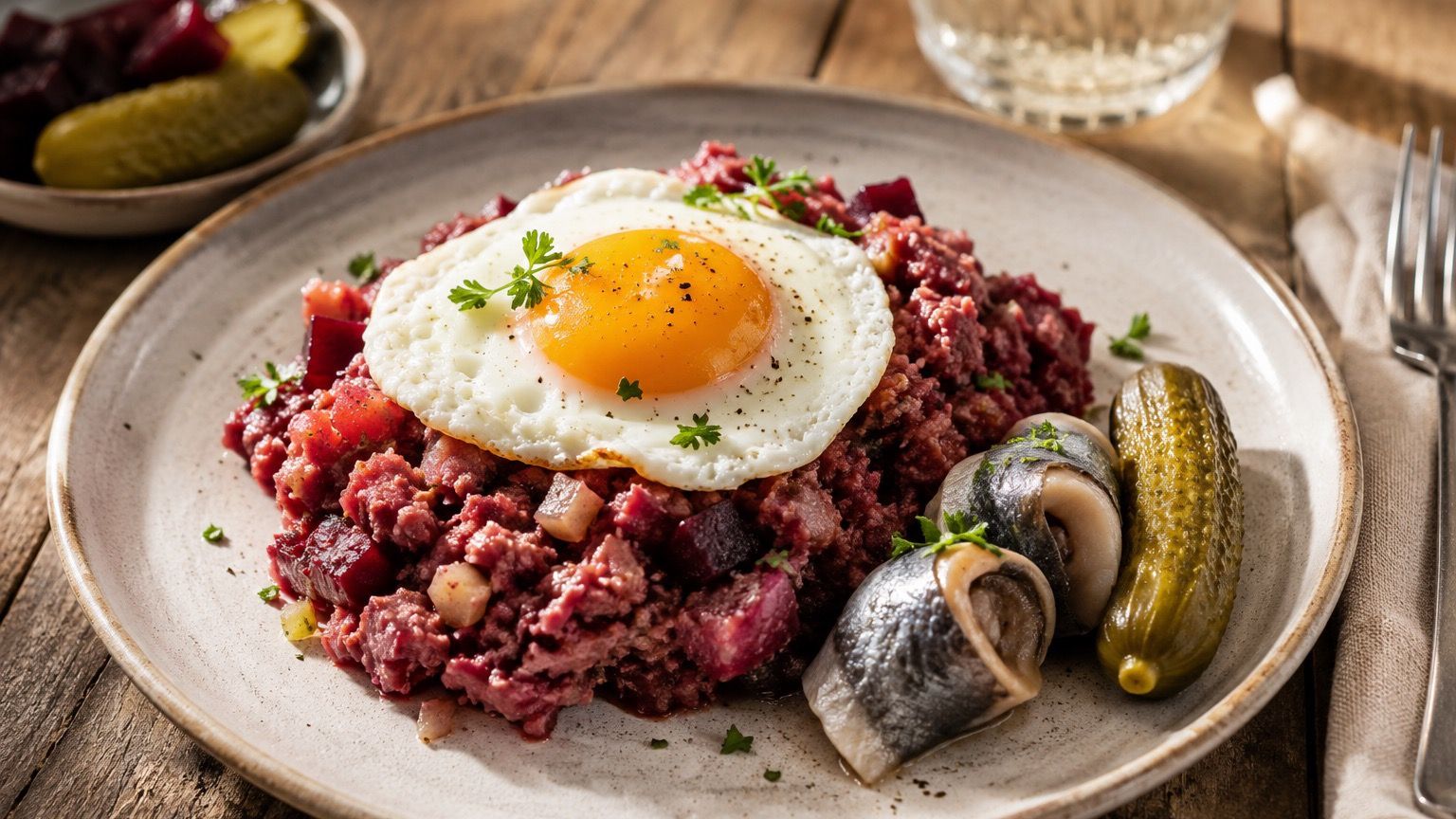
Labskaus is a potato dish with salted beef and beetroot, common in North Germany, Scandinavia and – as “Scouse” – in Liverpool. Not a prettily arranged plate but a hearty, pink mash: everything is chopped and combined. The classic comes with crisp, sour sides that cut through the richness.
The classic ingredients
- Salted beef or corned beef the savoury base – once preserved meat kept on board.
- Mashed potatoes bind everything into a loose purée.
- Beetroot gives the typical pink-red colour and a sweet-sour note.
- Onions sweated in lard or oil.
- Fried egg goes on top – part of the picture.
- Rollmops or matjes soused herring on the side, the contrast to the meat.
- Gherkin crisp and sour, often served with pickled beetroot.
The arrangement is a matter of taste – classically the mash is topped with a fried egg, with rollmops, gherkin and beetroot alongside.
Where does Labskaus come from?
Labskaus is a true seafarers’ dish. It was first mentioned in 1706 by the English author Ned Ward as a sailors’ meal; an English-German dictionary of 1802 describes it as “a sailor’s dish of salted meat, biscuit and onions”. In German sources it appears in an 1878 nautical dictionary – with the potatoes already added. From the ports of the North and Baltic Seas it moved ashore: to Hamburg, Bremen, Lübeck, Flensburg and far into Scandinavia.
Why a mash of all things?
The reason is as practical as it is unappetising: on long voyages many sailors suffered from scurvy – a vitamin-C deficiency that loosened their teeth. Solid food was hard to chew. So everything was chopped and mashed. Beetroot and sour gherkins also provided vitamin C and helped prevent scurvy – long before anyone could explain the link.
What does the word mean?
The origin of the name is disputed – which is what makes it fun. Several readings circulate: from the English “lobscouse” (hence “Scouse”, the nickname for Liverpudlians); from Low German “Lappen” (a cut of belly meat) and “Kaus” (bowl); from a Norwegian sense of “something easy to chew”; and even from the Baltic “labs kauss” – “good bowl”. There is no single answer.
Regional variants – and the Lübeck exception
As simple as the base recipe is, the regions differ. Flensburg and North Frisia leave out the fish; elsewhere herring is a fixture. And Lübeck – of which Travemünde is part – has its own signature: here fish traditionally goes into the Labskaus. By the water, where the cutters land, that makes sense.
Labskaus in Travemünde
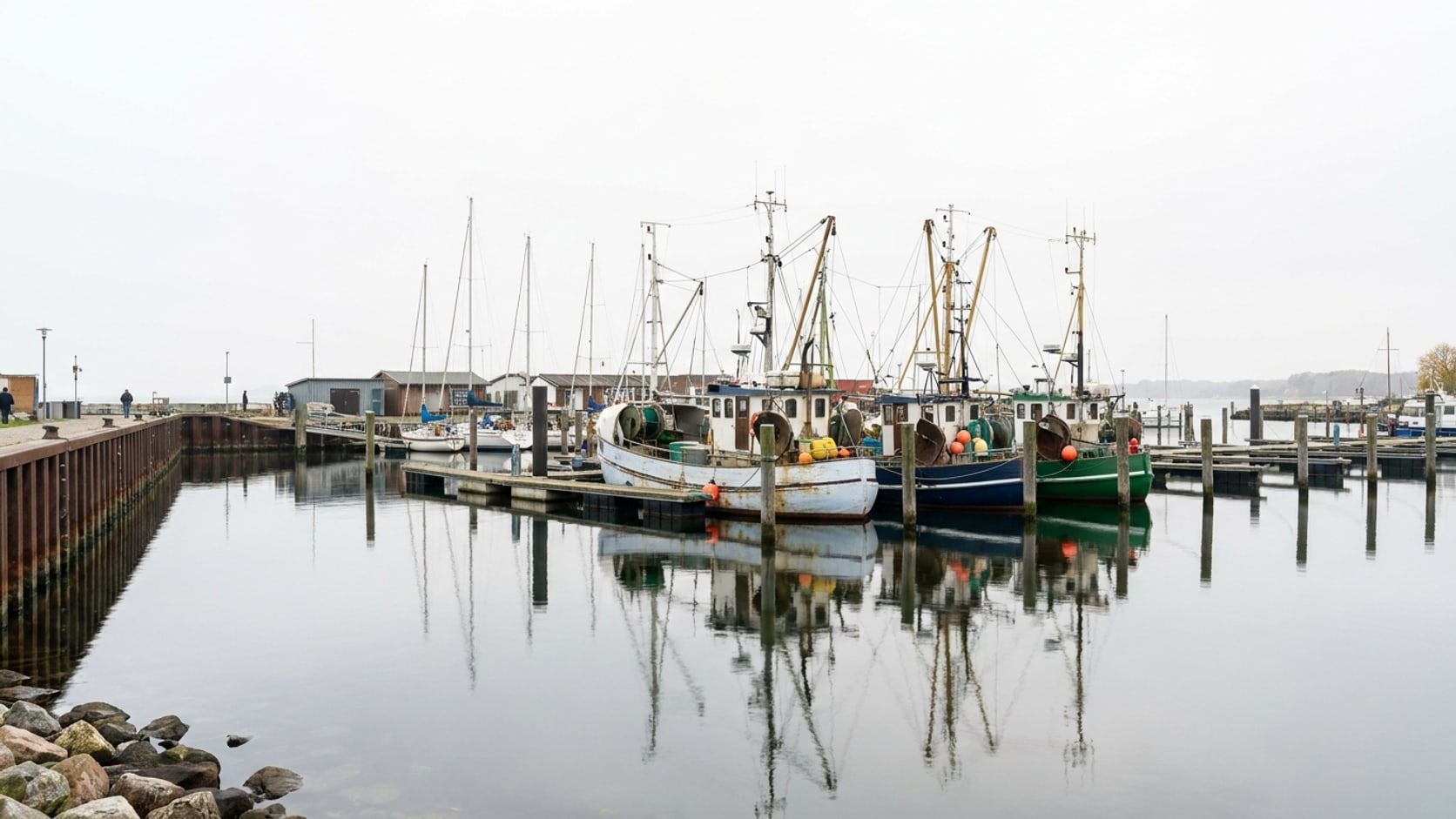
As a Baltic resort at the mouth of the Trave, Travemünde is exactly the kitchen Labskaus comes from: seafaring, harbour, fresh fish. Anyone wanting to try the maritime cuisine will find it at the fishing harbour and in the food guide – where you’ll also find the famous fish rolls. Labskaus isn’t on every menu, but it’s the hearty, honest classic of the region.
Frequently asked questions about Labskaus
What goes into Labskaus?
Classically: salted beef or corned beef, mashed potatoes, beetroot and onions, all combined. Plus a fried egg on top, and rollmops or matjes, gherkin and pickled beetroot on the side.
Why is Labskaus pink?
The colour comes from the beetroot mixed into the potato-and-meat mash. It gives the dish its characteristic pink-red hue and a slightly sweet-sour note.
Where does the name Labskaus come from?
The origin is disputed. Readings range from the English “lobscouse” (hence “Scouse” for Liverpool) to Low German “Lappen” (belly meat) and “Kaus” (bowl) to the Baltic “labs kauss” – “good bowl”.
Is Labskaus the same as lapskaus?
Yes – it’s the same dish. “Labskaus” is the North German spelling, “lapskaus” the Scandinavian one (Norway, Denmark, Sweden). In Liverpool a related version is called “Scouse”.
Why did sailors eat Labskaus?
On long voyages scurvy (vitamin-C deficiency) loosened sailors’ teeth, making solid food hard to chew. Chopping and mashing everything was the answer – beetroot and gherkins also supplied vitamin C.